
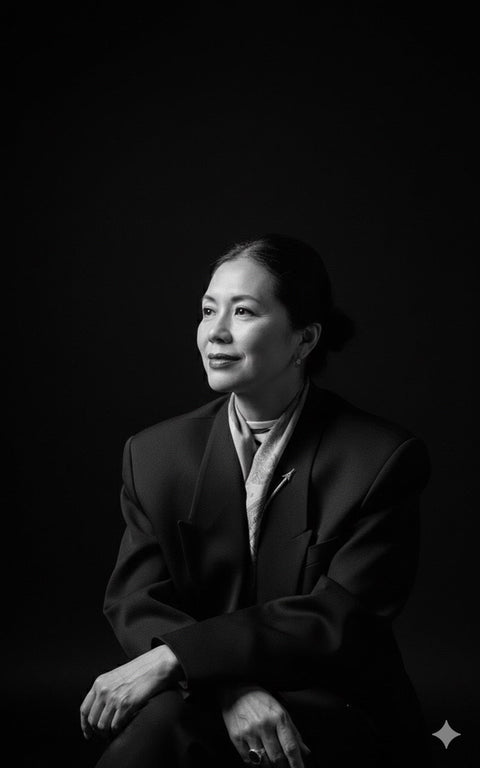
Ahead of the Trends | Masako Kaufman 雅子カウフマン
NYC’s powerhouse curating American brands for the Japanese market
Masako Kaufman is one of the fashion industry’s power players connecting New York and Tokyo.
From her New York base, she has spent three decades championing emerging designers—introducing labels like Thom Browne and Proenza Schouler to Japan long before the hype.
Navigating more than 500 brands through Japanese market and a seat on the selection committee of CFDA, Masako remains the tastemaker every rising designer hopes to have on their side.

Ahead of Trends
Among fashion insiders, Masako Kaufman’s sense of style is something of a legend.
When she arrives at the restaurant of the Metropolitan Museum of Art—impeccably dressed, as always—it’s easy to see why.
“I love clothes so much that I even rent storage space for them,” she says with a laugh. “I simply can’t throw them away.”
Over lunch, I asked her about the projects and discoveries that have shaped her career.
IROHA: Could you tell us about your current or recent projects.
MASAKO: As the New York representative for United Arrows, I introduce new American brands to Japan and work on collaborations and other projects.
More recently, I was involved in a project related to Steven Alan USA, transferring certain trademarks in Japan and parts of Asia back to Japan following a licensing agreement.
Some time ago, I proposed that United Arrows invite the fashion team from GQ, including then fashion director Jim Moore, to Japan for a week. I accompanied them on the tour.
At that time, there were still relatively few people in the international magazine world who were familiar with Japanese menswear brands. I wanted them to see how exceptional they were.
Japanese menswear has extraordinary craftsmanship and quality, and I felt it deserved greater international recognition.

with Jim Moore and GQ team
The Early Days of Thom Browne
IROHA: Which designers were turning points in your career?
MASAKO: In the beginning I handled brands such as Miguel Adrover and started my buying office at home.
Boxes of shipments would arrive—sometimes hundreds of them. I would inspect everything myself and ship them to Japan.
Eventually my husband told me, “Please stop doing this from the house.”
One important milestone was introducing Cynthia Rowley to Gunze in Japan and helping open the Cynthia Rowley store in Ginza. We also worked on multiple licensing agreements with several companies.

Cynthia Rowley store opening, August 1995
Not long after I began buying, I met Thom Browne.
I remember visiting his studio in the Meatpacking District and being deeply impressed by his work. I introduced him to United Arrows, but at first his pieces didn’t sell well.
Still, I told the buyers, “Please don’t give up. He will become famous.”
I also worked closely with Michael Bastian and organized events together in Japan.

with Thom Browne
Fashion Consulting as Matchmaking
IROHA: What do you enjoy most about being a fashion consultant?
MASAKO: Finding great designers and connecting them with the right retailers—that’s what I love.
When I worked with the buying team at Marubeni, which had relationships with many companies and select shops, I learned a lot.
Later I was entrusted with running the American buying office. Through that role, I met many Japanese buyers and American designers.
There was a period when about 25 buyers would arrive in New York at the same time. I would take each of them around the city, introducing designers and brands that suited them.
It was an extremely busy period, but the matchmaking was exciting.
Compatibility between a designer and a retailer is very important. It only works when there is mutual respect on both sides.
Personally, I’ve always loved discovering new things. I’m constantly looking for new brands and visiting emerging designers to see what they’re doing.
And of course, I want to wear their clothes myself.

with Josh Pescowitz and Nick Wooster
Why Fashion Still Needs the Physical Experience
IROHA: What advice would you give to younger people entering the industry?
MASAKO: I want them to have their own experiences; I believe true understanding comes from doing, not just observing.
Today you can research anything—watch it on YouTube or ask AI. But there are many things you cannot truly understand unless you experience them firsthand.
If you want to learn about fashion, visit stores. Try things on.
You don’t have to buy expensive pieces but try wearing them. When something feels right on your body, it creates excitement. Those experiences enrich you as a person.
Whenever I bought clothes from a new brand, I would purchase pieces with my own money and wear them myself.
That’s why I ended up buying an enormous number of clothes—but unless you wear them, you can’t really understand their comfort or practicality.
Sometimes I realized something wasn’t good after wearing it. Other times people complimented me, which of course was very rewarding.
When I truly believe in a brand after wearing it myself, I strongly recommend it to retailers.
That’s how I ended up with so many clothes that I now must rent storage space for and firsthand really experience does matters.
Human sensations and emotional responses cannot be fully replicated online.
From now on, I believe we will need both high-tech and low-tech perspectives.

with Michael Bastian
Finding Depth in the Japanese Tea Ceremony
IROHA:What do you enjoy outside of work?
MASAKO: I study Japanese tea ceremony and the more you learn, the deeper it takes you.
I first learned the Ura-Senke style in high school, but around 2020 I began wearing kimono again, and since 2023 I have been studying Ura-Senke more seriously.
I feel there is no other practice that explores the concept of hospitality as deeply.
I also love collecting kimono—though I still feel I don’t have nearly enough.

in the Cha-Seki room
My husband and I have also been sailing together for about 30 years.
We are members of the Hudson River Community Sailing Club and help raise funds so that young people who might not otherwise have the opportunity, can learn to sail.

Sailing their yacht
PROFILE
Masako Kaufman was born in Nagano, Japan. After working as a pharmacist, she moved to New York.
For more than three decades she has worked as a fashion consultant, helping bring more than 500 American brands to the Japanese market.
Starting with her own independent buying office, she later established Marubeni America’s buying office and introduced emerging brands to Japan through retailers such as United Arrows, Baycrews and Tomorrowland. She has also maintained close relationships with major companies including MUJI, Uniqlo and Itochu.
Brands she has introduced to Japan include Cynthia Rowley, Jill Stuart, Tuleh, Miguel Adrover, Rebecca Taylor, Thom Browne, Gant Rugger by Michael Bastian, The Row, Proenza Schouler, Thakoon, Rag & Bone, Nick Wooster, BODE and Ashlyn NYC, among many.
Since 2012 she has served as New York representative for United Arrows, overseeing brand buying and contracts.
She is also involved with the American fashion industry as a member of the CFDA designer selection committee and recently served on the advisory committee of the American Museum of Natural History, contributing to the creation of its Sensory Room.
written by Eri Kurobe, photography: Courtesy to Masako Kaufman
Masako's Instagram