
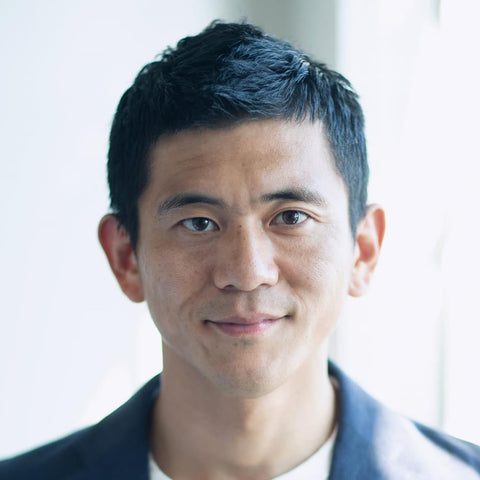
Film Tech at the Frontier | Masaki Nakayama 中山雅貴
Choosing the Uncommon Path
">
For two decades at Sony Pictures, Masaki Nakayama has built a career at the intersection of technology and creativity.
He was born and raised in Japan—not in the U.S., and not as a film-school graduate—he went on to carve out a unique place in Hollywood, launch a virtual production subsidiary, and earn a U.S. law license along the way.
We spoke with Masaki from Hawaii about the unconventional path that brought him here, and the philosophy that has guided every major decision.

gunpla by Masaki Nakayama instatram @garagestudio77
From Kamakura to Sony’s Global Business
IROHA: How did you first get involved with Hollywood and the film industry? Did you graduate a Film school in the U.S or something?
MASAKI: No, to start from the beginning, I was not a student who had been abroad and my parents did not speak English. I grew up in Kamakura, and I didn’t even get my first passport until my junior year of university.
And at the time, I felt like my world was too small, so I went to the U.S. for a 10-month study abroad because I simply wanted to get out and see more of the world.
When I started job hunting—this was about 26 years ago—Sony was unusually recruiting by specific job categories, I applied for an overseas marketing position. While other new employees had international backgrounds, I entered the company with only ten months of experience.
After joining Sony, I built my career in marketing for audio components and related products in Tokyo, Singapore, and Malaysia.
Choosing Hollywood Over an MBA
MASAKI: The turning point came when I enrolled in an MBA program at the University of Virginia through Sony’s company sponsporship.
Toward the end of my first year, a senior colleague at Sony Pictures was moving to another role.
An MBA is normally a two-year program, and I had only finished the first year, so I had to think carefully about what I really wanted to do.
But then I thought, “there are plenty of MBA holders but very few Japanese working at a Hollywood studio. This sounded more interesting,” so I left the MBA program and chose the studio job.
IROHA: What kind of role was it?
MASAKI: At that time, Sony Pictures felt somewhat distant from Sony as an electronics company in Japan, both in business and in culture.
And within Sony Pictures, there wasn’t a strong sense of being part of the larger Sony Group either.
Since I came from Sony headquarters, my role was to bridge the two—connecting Sony’s technology with Sony Pictures’ film making.
I joined a group called Corporate Alliances which was established a few years back. I looked for an area where Sony can leverage film production knowledge to make better products. For example, I worked closely with camera engineers in Sony and filmmakers in Hollywood to improve how our cameras were used on set.
Based on my audio products background, I also worked on features called “Digital Cinema Sound.” It enhances how movies sound at home with Sony speakers and headphones. I always enjoyed bringing together Japanese engineers and Hollywood filmmakers to co-create these technologies.

Proving What You Can Do
IROHA: How was it to suddenly move into such a different field?
MASAKI: In Hollywood, the first question is always, “What can you do?” Proving that was incredibly difficult at first.
I didn’t have the background or strong English skills, so it took me two years just to make friends to have lunch with.
I had only seen films like an average moviegoer before, so for the first two years I watched six movies a day to catch up.
While many expatriates think about eventually returning to Japan, I decided to put down roots here and never treated going back as an option.
To survive here, you need a clear sense of how you can contribute. That is why I left Sony Corporation in 2013 and switched to local employment (Sony Pictures), a separated entity and culture from Sony Japan.
By then I had already started law school, so I prioritized that and eventually earned my U.S. Bar qualification.
I wanted to accelerate contract negotiations and engage with local lawyers on an equal footing.
Building Virtual Production
IROHA: You also helped launch a new business at Sony Pictures, didn’t you?
MASAKI: Yes. The area I focused on was Virtual Production.
Instead of using green screens, this method uses large LED displays to project digital backgrounds in real time during filming.
If you imagine a dinosaur standing in front of you, it’s hard for everyone to share the same sense of color or motion.
With this method, actors and directors can film while seeing the environment around them.
If Sony’s technology enables Sony’s films to be made differently, it opens new forms of expression and supports creators’ visions.
To drive that business forward, we established a subsidiary under Sony Pictures.
Since I had a legal background by then, I was comfortable setting up a company and managing acquisition processes smoothly.
Connecting technology and business has always been my passion.

with Sony Innovation Studios' team
Skills and Mindset to Succeed
IROHA: What qualities are needed to work in Hollywood?
MASAKI: There are both qualities and skills involved.
In terms of skills, you need a clear answer as to “What you can do?” Many Japanese professionals succeed in Hollywood—as makeup artists, nail artists, CG artists—but they all have a defined specialty.
It’s not about saying “I can do anything.” You need one clear strength. It could be accounting, finance—anything—but you need a core expertise.
At first, I didn’t have that. But I knew more about Sony than any local employees in Sony Pictures. So, people started saying, “If it’s about Sony, ask Masaki.” That became my place.
As for mindset, it helps to believe “I can do this.” Many Japanese people tend to overthink—worrying about risks or whether they’re ready.
IROHA: The cautious “look before you leap” mentality?
MASAKI: Exactly. But Hollywood is highly competitive, and everyone wants to be here. When asked, “Why should we choose you?” you need resilience and a clear answer.
Start Before You’re Ready
IROHA: What advice would you give to the younger generation?
MASAKI: It’s simple: “Just come—and try it yourself.”
I often talk with young people who want to become a Hollywood director or make a certain kind of film.
But when I ask, “What have you shot so far?” they often say, “Well, not yet”.
Many people wait until they’re fully prepared, but that’s a waste of time. If you want to shoot, shoot. If you want to write, write. Today, there are so many platforms—YouTube, Instagram, etc.
I once even wondered, “How do you become an influencer?” As a hobby, I built plastic models and started an Instagram account to test whether I could become a Gunpla (Gundam plastic model) influencer.
At first, I had just one follower—my daughter. But by consistently posting, I grew it to over 13,000 followers.
Whenever I have a question, I just start. You won’t learn anything until you try.

Early Mornings, Clear Priorities
IROHA: You’ve achieved a lot—becoming an influencer, earning a law license, and more. Is there a secret to getting things done?
MASAKI: It’s very clear: do everything in the morning.
Mornings are when no one interrupts you, and your mind is sharpest. I wake up at 4 a.m.—I study, build models, even surf in the morning.
If you leave it for later, all kinds of things get in the way: the water heater breaks, you have to pick up your child, someone gets sick, and so on.
Once work starts, plans get disrupted, so the most efficient thing is to finish important tasks before the day begins.
IROHA: What time do you go to bed?
MASAKI: Sometimes as early as 9 p.m.
IROHA: No after-work drinks?
MASAKI: Not at all. I don’t drink.
People try to do too much—being overly diligent. It’s important not to aim for perfection in everything.
When I was studying for the bar exam, I kept my work limited to what I could handle within my 20 years of experience. I also cut off social media for six months.
I make my priorities clear, and then I put all my energy there.

With legendary surfboard shaper Robin Kegel and his new signature longboard.
Choosing the Uncommon Path
IROHA: You continue to move into new position at Bandai Namco Film Works America. How do you make those decisions?
MASAKI: At life’s crossroads, I choose the interesting option—and where fewer people go.
There are billions of people in the world, after all. There are countless people smarter or more entertaining than me.
When I decided to go to a Hollywood studio, I knew many MBA graduates—but no one working in a Hollywood studio, so I chose that path.
Later, I realized there were few people on set with legal qualifications, so I pursued that too. That’s what feels most interesting to me.
For those who want to go abroad, thinking this way might make things easier.
I want to keep choosing paths that others don’t take—and continue enjoying new challenges.
Written by Eri Kurobe, Photography: Courtesy of Masaki Nayakama
LINKS
Instagram @masaki_nakayama_77
Gunpla instagram @garagestudio77
PROFILE
Masaki Nakayama is a media and entertainment executive with extensive experience spanning global business development, technology innovation, and intellectual property strategy across the entertainment industry. He currently serves as COO of Bandai Namco Filmworks America.
Prior to joining Bandai Namco, Msaki built his career at Sony Group Corporation and Sony Pictures Entertainment, leading initiatives in emerging technologies, virtual production, innovation strategy, and cross-industry partnerships. During his time at Sony, he played a key role in developing new entertainment business models and advancing cutting-edge production technologies, including Sony Innovation Studios.
In addition to his corporate leadership background, Masaki is also trained in law and holds bar admissions in California. His multidisciplinary expertise across entertainment, legal affairs, and technology has made him a notable figure in the evolving global media landscape.